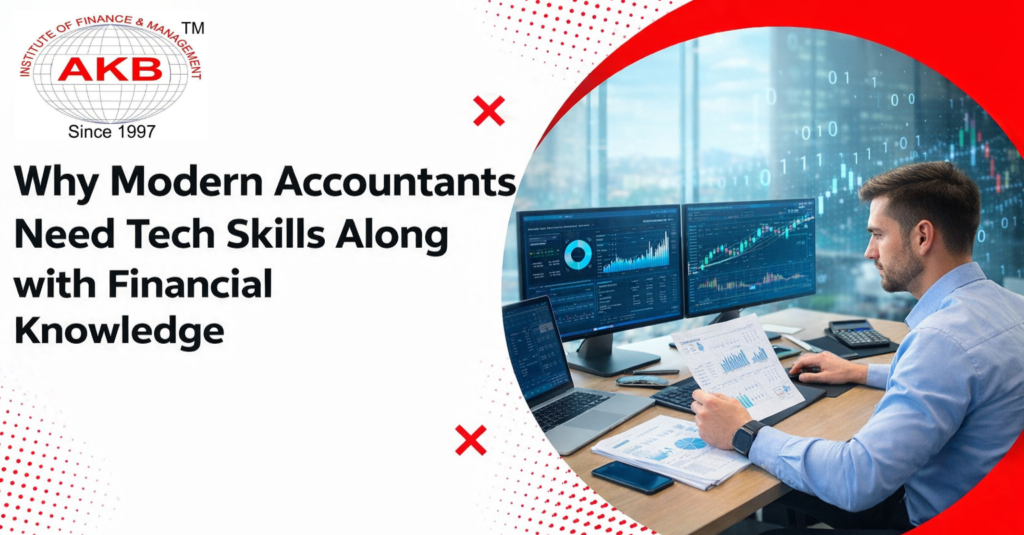
Accountants used to be associated with bookkeeping, entries on ledgers, and compliance-related issues. There was more of an operational role to capture the financial transactions properly and make sure that the statutory filings were done promptly. Although these responsibilities remain fundamental, technology has transformed how these tasks are performed,
The Shift from Traditional Accounting to Tech-Enabled Strategic Business Support
The modern-day business world requires more than historical financial reporting. With digital accounting systems, ERP software, automation tools, and data platforms, accountants are now expected to interpret real-time financial data, identify risks and opportunities, and support management decisions. This shift has turned accountants into tech-enabled business advisors who influence strategy, efficiency, and long-term growth rather than acting only as record keepers.
How Technology Is Redefining the Modern Accountant’s Role
Due to the emergence of accounting software, ERP systems, manual bookkeeping systems, and cloud-based platforms, monotonous bookkeeping work is performed less and less manually. Reports, reconciliation systems, reconciliations, and transactions are now performed in a fraction of the time they used to take for reconciliations, and manual intervention is not necessary.
Automation and Accounting Software Have Reduced Dependence on Manual Bookkeeping
With such a change, the accountants can concentrate on more valuable tasks that need judgment and perception instead of data input. Professionals who understand how to use and interpret technology-driven reports are now far more valuable to employers than those limited to manual accounting skills.
• Accounting activities in place are now software-based.
• Automated systems contain accuracy and speed.
• Financiers waste time analyzing financial data.
• The value will be generated by wisdom, rather than labor.
Financial Analysis Powered by Technology Is Becoming a Core Responsibility
Financial analysis has become important in making informed decisions by modern businesses. The accountants expect to study the trends of profits, cost structure, and cash flow patterns using software-generated dashboards and MIS tools to support planning and improvement of performance.
Accountants are no longer preparing financial statements, but they are explaining the reasons why numbers have changed and what can be done to produce better results. Technology enables deeper analysis, making accountants strategic advisors instead of mere reporters.
• Analysis improves budgeting and forecasting.
• Trends and variances are interpreted by accountants.
• Financial knowledge informs the management.
• Profitability planning is enhanced by advisory input.
Compliance Knowledge Combined with Technology Creates Strategic Value
GST, payroll laws, regulations, and taxation are becoming complicated over time. Companies no longer only want to use accountants to file returns statements and returns, but they also seek them to use compliance software, GST portals, and payroll systems for planning, risk reduction, and cost effectiveness.
A well-informed accountant is able to assist organizations’ returns, help organizations evade fines, cope with audits, and organize the operations more effectively. This consulting position has an extra strategic value compared to routine compliance. organizations’ routine compliance.
• Good compliance knowledge minimizes the legal risk.
• Accountants spearhead decision-making that is tax-efficient.
• Business continuity is facilitated by regulatory planning.
There is compliance expertise that creates organizational routine compliance and confidence.
Management Reporting and MIS Tools Drive Faster Decision-Making
MISs and tailored reports within the organization have become very essential instruments for the leadership teams. Accountants are involved in the creation and maintenance of these reports to monitor the performance by department and project.
Accountants assist the management in overseeing KPIs, managing costs, and planning future activities by converting raw financial data into straightforward MIS reports. Technology makes their advisory role faster, clearer, and more impactful.
• MIS reporting helps in performance appraisal.
• Accountants make department-based insights.
• Reporting based on data allows making decisions faster.
• Internal reporting enhances the advisory relevance.
Technology Enables Accountants to Participate in Business Planning
The use of accountants in expansion plans, investment analysis, and pricing is an increasing trend. Technology allows them to simulate financial scenarios, analyse risks, and forecast outcomes in making sound strategic decisions.
Such engagement means that accountants must learn business models and market dynamics and expand their role beyond being a back-office supporter to a strategic participant in the business.
• Expansion decisions are supported by financial planning.
• Investment returns and risks are evaluated by the accountants.
• Long-term performance is enhanced by the strategic input.
• Influential roles in business direction are advisory roles.
Employers Prefer Accountants with Tech and Multi-Skill Expertise
The new employment market is inclined to prefer accountants with skills that are more than merely accounting skills, such as taxation, payroll, software mastery, reporting, and analysis. Employers demand individuals with the capability to handle various financial tasks effectively.
This preference has changed the direction of growth in careers to those who can assist at the strategic level as opposed to those confined to one-task jobs.
• Multi-skilled accountants are better placed in employment.
• Multidiversity enhances job security.
• Leadership is assisted by advisory capability.
• Professional value is enhanced by skill diversity.
Practical, Technology-Focused Training Is Replacing Theory-Based Learning
In order to address the changing demands, accounting education has also changed towards being pragmatic and hands-on training. Employers want the applicants to be able to cope with the actual business situations on the first working day, as opposed to being dependent on academic knowledge only.
Hands-on experience helps accountants acquire problem-solving and advisory skills at an early age in their careers.
• Work experience enhances work preparedness.
• Real-life exposure instills confidence.
• Practical learning facilitates advisor development.
• Industry-oriented education responds to the demands of employers.
Tech-Enabled Advisory Roles Offer Higher Growth and Earnings
Those accountants who enter the advisory arena receive more frequent promotions and greater salary growth. These roles are more responsible and strategic and have more decision-making authority.
The need for financial advisors is on the increase since businesses are increasingly depending on them.
• The advisory positions are highly paid.
• Advancement of career is quicker.
• Strategic participation enhances power.
• The long-term growth opportunities become better.
Conclusion
Accountants have changed their role considerably, as technology, complexity of business, and strategic financial insight have altered the traditional role of accountants that involved mere bookkeeping. Modern accountants must blend strong financial knowledge with proficiency in accounting software, compliance systems, reporting tools, and analytical platforms to remain relevant. Those Academic institutions, such as AKB Institute of Finance and Management (AKBIFM), have an important role to play in enhancing this transformation by providing relevant, industry-focused training to help accounting professionals succeed as contemporary business advisors.